GCSE Core subjects
English Language
Well-honed skills in both reading for meaning, and writing for different purposes and audiences, are essential for a successful life. Our students study a range of both modern fiction extracts, and nineteenth century and twenty-first century non-fiction extracts. Our students work hard on developing proficient writing skills in a range of styles. They sit two papers; explorations in creative reading and writing, and writers’ viewpoints and perspectives, as well as giving a 3-5 minute speech on a chosen topic.
English Literature
Our curriculum is designed to give students a comprehensive exploration of literature in English, alongside a wide range of non-fiction texts and, importantly, honing those writing skills. The KS4 curriculum provides exposure to nineteenth century literature and non-fiction texts, creative and persuasive writing, poetry, drama texts and Shakespeare. We study the AQA English Language and Literature specifications; in addition at KS4 we ensure that the texts we explore and the skills we develop are clearly linked to KS5 English Literature.
Mathematics
Mathematics is about solving problems; either real world or abstract and algebraic.
Our students learn to develop fluent knowledge, skills, an understanding of mathematical methods and concepts and apply these mathematical techniques to solve problems and draw conclusions. The course content is broken down into four main areas, Number, Algebra, Geometry & Shape, and Probability & Statistics. Students will take part in the Junior and Intermediate Mathematical Challenge run by the United Kingdom Mathematical Trust. All students in year 11 will take the iGCSE in Mathematics. Some students will take a GCSE Further Mathematics qualification as well.
Religious Studies
Religious Studies helps students develop knowledge and understanding of religions, non-religious beliefs, religious teachings, and sources of wisdom and authority. Our students engage with questions of belief, value, meaning, purpose, truth, and their influence on human life. Religious studies helps equip our students for life in a pluralistic society and global community. The course includes Roman Catholic Christianity, Judaism and Philosophy and Ethics.
Science
Science is investigative, relevant and dynamic. Our aim is to provide a sound foundation for all students and it is an essential qualification for over 30% of careers. Following science can lead to future work associated with genetic engineering, forensics, medical physics, nursing, telecommunications, biotechnology, engineering, technology and medicine. Furthermore, science enables our students to have a greater understanding of the world around them. Our students are prepared for the Combined Science: Trilogy Award (2 GCSEs), which is part of the compulsory core curriculum for all students. Alternatively, they can choose to take Triple Science (3 GCSEs) using one of their option choices. In each case there are 6 exams, two each of Physics, Chemistry and Biology.
GCSE Optional Subjects
Fine Art
GCSE Art is about having an adventurous and enquiring approach to the visual world and developing the skills to express it. Our students learn about past and contemporary art and design and are able to produce a personal response embracing a range of ideas. Our students develop the skills to investigate, analyse and experiment, as well as expanding their imaginative powers and the skills to express their ideas and feelings. They will also gain an understanding of the place of art, craft and design in history and in society. The GCSE course is made up of two parts, a personal portfolio in Art and Design and an externally set assignment.
Classical Civilisation
Await content
Computer Science
Computer Science develops our students’ understanding of the main principles of problem solving using computers. They will learn to develop computer-based solutions to problems using algorithms and a high-level programming language. Computer Science and ICT are not the same subjects; ICT teaches students how to use modern computer technologies whereas Computer Science teaches them how to design and develop computer-based solutions. Computer Science provides students with the underpinning knowledge required for many other subjects in science and engineering, and the skills learnt can be used in everyday life.
Drama
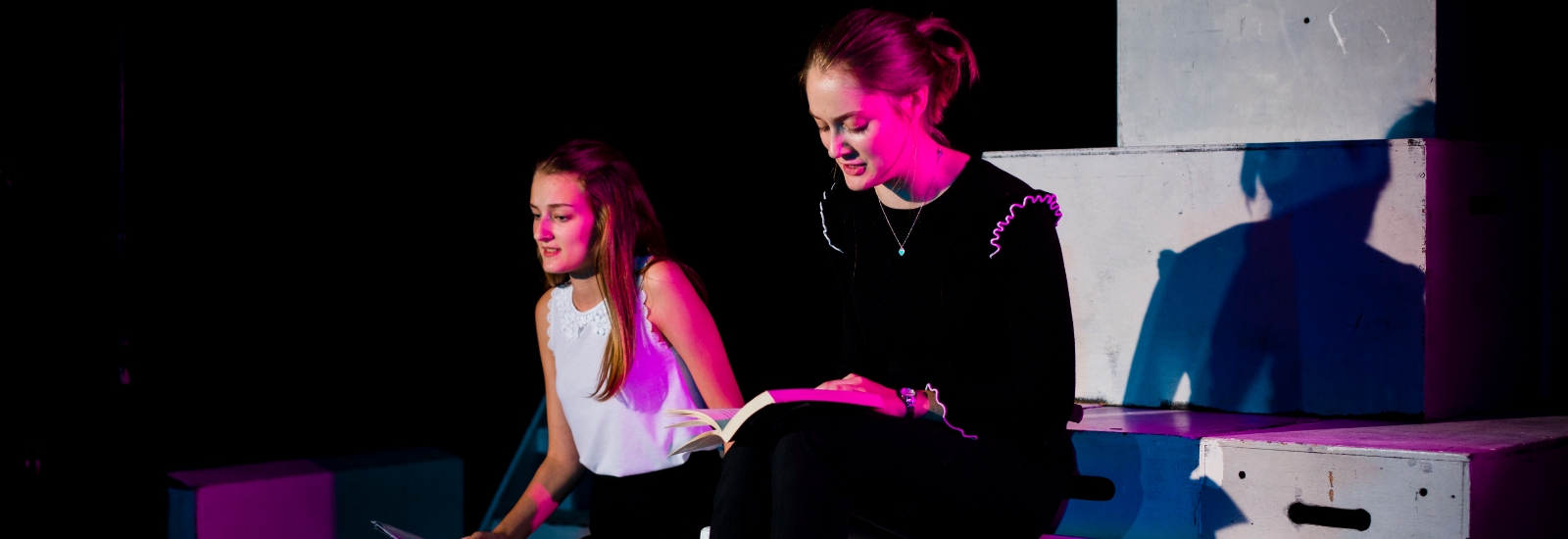
Students studying drama will work with their peers to create theatre. They will study theatre as an art form; its cultural and historical relevance; the creative processes of significant drama practitioners, directors and theatre companies, and significant dramatic literature from the theatrical canon. Drama offers the chance to perform, create, direct and design, as well as developing crucial skills for the future, such as collaboration and personal reflection. Students will perform extracts from challenging texts; working on diction, expression, intonation and how to convey meaning and create impact, alongside developing character and stagecraft. Our drama students go on theatre trips and take part in at least one workshop with a visiting theatre company.
Food Prep & Nutrition
Food Preparation and Nutrition is a starting point for many careers and a good foundation for further education courses concerned with nutrition and diet, food safety, quality control, product development and food science. This exciting course offers a wide range of food related topics for study and includes practical work. Both theory and practical skills are assessed during the course which ensures students develop a thorough understanding of nutrition, food science, food provenance and the working characteristics of food materials.
French
The French GCSE course enables our students to understand the spoken and written language, and use it confidently to communicate with French-speaking people, in social and professional contexts. The course involves lively, challenging and motivating activities to enable our students to learn the vocabulary and constructions they will need. Listening, speaking, reading and writing are assessed at the end of the course, each by one examination. During the course there are opportunities to exchange information and views with students in our partner school in France, and to visit the country.
Geography
Geography is the study of Earth’s landscapes, people, places and environments. Geography at St Joseph’s harnesses the natural inquisitiveness of our pupils for the world around them. It provides them with a toolbox of skills to interpret their world whilst being aware of their responsibilities as a global citizen. We create a welcoming, enjoyable environment that strives to make the outside world come alive within our community. Topics of study include climate change, poverty, deprivation, global shifts in economic power and the challenge of sustainable resource use. Two days of fieldwork will be undertaken in contrasting environments. The department is a member of both the Royal Geographical Society and the Geographical Association.
Graphic Communication
Our students are introduced to a range of graphic media, techniques and processes, both traditional and new technologies. They explore images, artefacts and resources relating to a range of graphic communication from the past and recent times, throughout the world. Students choose to study one or more areas of Graphic Communication, including communication graphics, design for print, advertising and branding, illustration, package design, typography, multimedia, motion graphics, signage and exhibition graphics.
History
History enables students to study different aspects of the past, so they can engage with what drives change and how the past influences the present. Students will study Germany 1890-1945; democracy and dictatorship and The wider-world; conflict and tension 1918-1939 for Paper 1. Paper 2 will focus on Health and the people in Britain; c1000 to the present day and Elizabethan England, c1568-1603. The History Department offers a visit to Berlin to assist in enriching the syllabus, and opportunities to visit London on study days where available. History Club is available to all students who wish to deepen their understanding of any topic, not just those taught in lessons.
ICT
ICT gives students the essential computer skills used in the work environment as well as computer skills that can be used in their other subjects. ICT is a fast changing subject and the course has been revised to reflect the latest developments. The course is modern, has a high degree of practical work and is relevant to future studies and employment with the vast majority of jobs making use of computer technology. Students will learn practical ICT skills including website design, databases with relationships, spreadsheets, desktop publishing and mail merge. They will also learn about a range of computer hardware, computer networks, the internet and its impact on society. ICT students can enrol into the national Cyber Centurion competition, which is a cyber-security competition to defend network security.
Music
GCSE Music is for students who enjoy music and have an aptitude for it. The course consists of three components: listening, performing and composing. Listening includes not only traditional styles but also film and popular music. All musical tastes are explored and students are encouraged to develop their own musical interests. Students will perform instrumentally or sing, both solo and in small ensembles. The course is designed for candidates of all abilities so everyone is able to participate at their own level. We run termly trips to concerts and lunchtime recitals.
Physical Education
Students who enjoy sports performance will thrive in this GCSE subject. The topics relate to students as performers and can help them understand how to train and perform better in their sport. Practical sessions will teach them more challenging skills and give them a wider range of sporting performance. The theoretical topics are, the human body and movement in physical activity; physical training; health and well-being; sports psychology; sports technology and data analysis; sport in society. Practical sessions run alongside Senior games to include indoor climbing, netball or football and athletics or tennis.
Spanish
Spanish is the second most spoken language in the world. Studying Spanish makes students stand out from the crowd when applying for university and jobs. Spanish develops students’ social, communication and problem-solving skills, and enhances their knowledge of Hispanic culture, people and lifestyle. Students are assessed on listening, speaking, reading and writing. Students studying Spanish at St Joseph’s attend a GCSE Spanish Conference in London and a residential trip to Spain, as well as extra-curricular events such as Spanish Film Club or Tapas and Friends.
A Level Subjects
Art and Design
Art and Design develops students’ abilities to appreciate the visual world and to enable them to respond in a personal and creative way. The course encourages students to refine their technical skills, trust their creative instincts and investigate the work of varying artists enabling their personal style to evolve. The course aims to foster an enquiring mind, enjoyment and appreciation of Art and Design as a visual language. The structure of the course offers rich opportunities for students to pursue their own interests within Fine Art, Art, Craft and Design or Graphic Communication.
Biology
This course helps students develop a number of skills such as collecting and evaluating data, investigating facts and using deduction, communicating a point of view effectively and developing independent learning skills. The course is made up of eight topics; Lifestyle, Health and Risk, Genes and Health, Voice of the Genome, Biodiversity and Natural Resources, On the Wild Side, Immunity, Infection and Forensics, Run for your Life and Grey Matter. The course includes visits to Reading University to see their Electron Microscope and Bayer to perform complex experiments in a research environment. Our weekly Café Scientifique gives students an opportunity to hear external guest speakers.
Business Studies
This course aims to generate enterprising and creative approaches to business opportunities, problems and issues. It encourages students to be aware of the ethical dilemmas and responsibilities faced by organisations and individuals, and to acquire a range of relevant business skills. The course content includes meeting customer needs, marketing, managing people, entrepreneurs and leaders, raising finance, financial planning, resource management, business objectives and strategy, business growth, assessing competitiveness, managing change, globalisation, global markets and industries, and business expansion. Opportunities include running a business through the Young Enterprise scheme and visits to business organisations including the Mini plant in Oxford.
Chemistry
The course provides a practical experience for students to increase their enjoyment and understanding of Chemistry, along with the skills to study the subject at a higher level. Through studying selected topics in Organic, Physical and Inorganic Chemistry, students have the opportunities to make observations, critically analyse results and use their problem solving skills. Different aspects of contemporary chemistry are included such as pharmaceuticals and alternative fuels. The Chemistry department has close links to Reading University and students have the opportunity to visit the Spectroscopy suite.
Classical Civilisation
This course provides students with a broad and rewarding study of the classical world. Students have the opportunity to study elements of the literature, visual/material culture and thoughts of the classical world while acquiring an understanding of their social historical and cultural contexts. The course is made up of three modules; The World of the Hero, an in-depth study of one of Homer’s epic poems and Virgil’s Aeneid; Culture and the Arts; and Beliefs and Ideas, a study of Greek Religion and the role it plays in society, alongside the functions and layout of famous temple complexes.
Computer Science
The course content includes Computer Systems; processors, input, output and storage devices, software development, data exchange, data types and structures, legal, moral, cultural and ethical issues; Algorithms and Programming; computational thinking, problem solving and a Programming project (non-exam assessment). Students will be expected to analyse a problem, design, develop, test, evaluate and document a program. The program must solve the problem and should be written in a suitable programming language. Students will have the opportunity to take part in the CyberCenturion Cyber Security Challenge.
Drama and Theatre Studies
This course explores theatre as an art form; developing students’ understanding of the cultural, social and historical context, their skills in a range of theatrical mediums: acting, directing, design and theatre technologies, and enabling them to think creatively, work collaboratively and respond analytically. There are three components; Drama and Theatre, Creating Original Drama – devising a piece of theatre, and Making Theatre – the performance of three theatrical texts. Regular theatre visits are undertaken and workshops are held within and outside school. Students are invited to help with lower school productions, as well as participating in their own senior and whole school performances. Students can also take optional Speech and Drama lessons (LAMDA).
Economics
In Economics you will look at issues which affect our lives, such as economic scarcity, employment, prices, international trade and poverty. Economists often debate over these issues and it is this controversy which makes Economics lively and interesting and which allows students to form their own opinions. The course involves three modules; Markets and Market failure, National and International economy, and Economic principles and issues. Economics is a versatile subject that helps students in a number of careers.
English Literature
The aim of this course is to foster a love of, and appreciation for, a range of literature and to encourage students to pursue their own independent study into an area of literature they especially enjoy. It also aims to broaden their knowledge and encourage wider reading of texts that have shaped our own and other cultures. The course involves exploring poetry and prose pre 1900 and a Shakespeare text, discovering modern day texts post 1945 and an independent critical study where students research texts of their own choice. Students go on a wide variety of theatre trips and also take part in conferences.
Geography
Studying the AQA course, students are encouraged to recognise the complexity of the relationship between people and their environment, engage as knowledgeable, questioning citizens, who realise that the values, attitudes and circumstances of people impact upon their decisions in the world. The course includes a variety of Physical and Human topics, which reflect current world issues and themes. There are four days of fieldwork incorporating the use and analysis of graphs, maps, statistics and digital data. The department regularly attends study days at the Royal Geographical Society, the Mountain and Ocean Film Festivals at the Hexagon and has a very active eco-committee.
History
History aims to develop students’ expertise in analysing and evaluating documents and acquiring knowledge of a wide range of topics in British and European History. Units cover topics ranging from Popular Culture and the Witchcraze of the 16th and 17th centuries to Twentieth Century Britain, focusing in detail on political, social and economic themes. The final module is completed independently by the student and can be on a topic of their choosing from virtually any time period. This acts as a forerunner to a dissertation they are likely to complete at university and can be hugely rewarding.
Mathematics
Sixth Form mathematicians will further develop the techniques introduced in years 7 to 11. Students will develop mathematical skills, coherent arguments and logical reasoning and apply these to increasingly complex and multi layered problems. The A Level in Mathematics is split between Pure Mathematics, Mechanics and Statistics. The main components of Pure Mathematics include Algebra, Geometry, Calculus, Proof and Trigonometry. The Mechanics and Statistics component covers Kinematics, Newton’s Laws, Probability, Statistical Distributions and Hypothesis Testing.
A Level Further Mathematics is a separate qualification to Mathematics and can be taken as a fourth A Level option. The additional content introduces the student to new topics including Complex numbers, Matrices, Differential Equations as well as furthering Statistics or Mechanics knowledge. There is some choice in what students study in Further Mathematics and we will always tailor our advice to the student. Students will take part in the Senior Mathematical Challenge run by the United Kingdom Mathematical Trust.
Music
A Level Music aims to extend the skills required to take part in, and appreciate making, music, developing each student’s musical interests, encouraging lifelong learning and providing access to music-related and other careers. A Level Music offers an exciting combination of performance and composition alongside listening and appraising. Apart from regular concert trips, A Level students participate in most extra-curricular activities within the College as well as running Junior Wind Band and A Capella. They can benefit from recitals, masterclasses and lunchtime concerts from professional musicians, and take part in musical productions such as Sister Act, Made in Dagenham and Midsummer Night’s Dream. Students can also travel abroad with our biennial music tours to Europe.
Philosophy, Ethics and Religion
The course aims to develop interest in a rigorous study of religion and belief
and relate it to the wider world, develop knowledge and understanding appropriate to a specialist study of religion and develop an understanding and appreciation of religious thought and its contribution to individuals, communities and societies. The course also aims to adopt an enquiring, critical and reflective approach to the study of religion, reflect on and develop their own values, opinions and attitudes in the light of their study.
Philosophy of Religion: ancient philosophical influences; the nature of the soul, mind and body; arguments about the existence or non-existence of God; the nature and impact of religious experience; the challenge for religious belief of the problem of evil; ideas about the nature of God; issues in religious language. Religion and Ethics: normative ethical theories; the application of ethical theory to two contemporary issues of importance; ethical language and thought; debates surrounding the significant idea of conscience; sexual ethics and the influence on ethical thought of developments in religious beliefs. Developments in Religious Thought: religious beliefs, values and teachings, their interconnections and how they vary historically and in the contemporary world; sources of religious wisdom and authority; practices which shape and express religious identity, and how these vary within a tradition; significant social and historical developments in theology and religious thought; key themes related to the relationship between religion and society in the context of one religion.
This course will teach you how to put forward logical arguments and back them up with evidence. It will also help you to focus your thoughts into concise and precise structures. This course is useful to all careers from medicine to law, business, journalism, politics and performing arts. Year 12 have the opportunity to take part in the CAFOD Young Leadership scheme.
Physical Education
A course which allows students to play to their strengths in performing their main sport to a high level. Theoretical content offers a deeper understanding of how the mind and the body of a performer change and adapt to the varying demands of training and competition.
Course Content:
• Applied Anatomy and Physiology
• Skill Acquisition
• Sport in Society
• Exercise Physiology
• Biomechanics
• Sports Psychology
• Sport Technology in Society
• Practical Performance or Coaching in one sport
Careers involving Physical Education include: PE teacher, personal trainer, physiotherapist, elite sports coach, sports journalist, dietician and sports technology. Students have the opportunity to develop their skills beyond the classroom in a variety of ways: coaching junior teams and/ or playing in and Captaining the 1st teams in Rugby, Football, Hockey and Netball; structured activities with staff; attending trips to use the Exercise Physiology equipment at University Sports Faculties.
Physics
Physics A Level offers a seamless transition from GCSE studies. It provides a smooth pathway to university courses in physics and other subjects in which physics is a key component, whilst developing students’ interest and enthusiasm. The course includes an interesting range of topics for both theory and practical study, such as Mechanics, Waves, Nuclear and Particle Physics, and Electric Circuits. The Physics department has two well-equipped laboratories and has very good technical support. Students regularly carry out experimental work to understand theory better and develop their practical skills.
Physics at A Level is an excellent basis for many degree courses, and plays a very good supporting role for the study of other sciences, mathematics, medicine, computing or engineering. A Level Physics is a highly regarded qualification and the shortage of scientists will make you valuable for a wide range of courses and careers. Pupils get to see the most advanced research in Particle Physics during a trip to CERN in Geneva and Gas Physics is illustrated by a Scuba Diving initiation. Each year, teams enter the very successful F1 in Schools Challenge. Our weekly Café Scientifique gives pupils an opportunity to hear external guest speakers present about their work and how STEM subjects are used in a broad range of academic and industrial areas. Pupils in the Sixth Form also develop leadership skills as they support younger pupils in our very lively STEM club.
Psychology
The aim of the course is to offer an engaging and effective introduction to Psychology, covering the fundamentals and enabling the development of skills valued by Higher Education and employers, including critical analysis, independent thinking and research.
Course Content:
Paper 1:
• Memory in everyday life
• Developmental Psychology: Social Influence
• Attachment in everyday life
• Psychopathology
Paper 2:
• Biopsychology
• Research methods
• Approaches in Psychology
Paper 3:
• Issues and debates in Psychology (compulsory) Students will take one topic each from 3 option blocks:
• Option 1 – Relationships, Gender, Cognition and development
• Option 2 – Schizophrenia, Eating behaviour, Stress
• Option 3 – Aggression, Forensic Psychology and Addiction.
Psychologists enjoy a fascinating range of career options, including occupational psychology, clinical psychology, forensic psychology and health psychology. An awareness of psychology is becoming increasingly important in a range of disciplines, from sports and exercise psychology, to human resources management, marketing, law and teaching.
Spanish
A Level Spanish helps students develop confident, effective communication skills in Spanish and a thorough understanding of the culture of countries and communities where Spanish is spoken. It develops an interest in, and enthusiasm for, language learning and encourages students to consider their study of the language in a broader context.
Contents:
1. Social issues and trends
Aspects of Hispanic Society
Multiculturalism in Hispanic Society
2. Political and artistic culture
Artistic culture in the Hispanic world
Aspects of political life in the Hispanic world
3. Grammar
4. Works
Literature: La Casa de Barnarda Alba
Film: Ocho Apellidos Vascos
Whichever career you specialise in, being fluent in Spanish will be an asset. In today’s global world, the skills developed through language learning, as well as extensive knowledge of a foreign culture, are highly prized by employers and universities. Top businesses, industries and universities are multinational and multilingual. Residential trips to Spain, attendance at exam skills conferences, theatre visits, trips to the Flamenco Festival, tapas evenings, Spanish film nights/cinema outings, access to Spanish media, weekly conversation lessons with the Spanish assistant.
EPQ - Extended Project
The Extended Project Qualification develops students’ ability to work independently in preparation for further study at a higher level. The Extended Project is a single piece of work that requires a high level of planning, preparation, research and autonomous study. It aims to improve students’ critical thinking and time management skills and inspires them to develop a love of learning for learning’s sake. All students have the option to complete an Extended Project and have free choice in selecting their topic.
The Extended Project helps students to develop a range of valuable skills through pursuing their interests and investigating topics in more depth. It demonstrates an ability to work independently, deliver a presentation, manage time, plan, research, edit and amend work with the support of a personal supervisor. The qualification is the equivalent of one AS Level, and is worth up to 28 UCAS points. It has been praised by universities and employers as a valuable means of guiding students into higher education and the workplace.